Put something in here

  • Chapkin Named AAAS Fellow

    ·

    COLLEGE STATION – Dr. Robert Chapkin has been named American Association for the Advancement of Science Fellow.
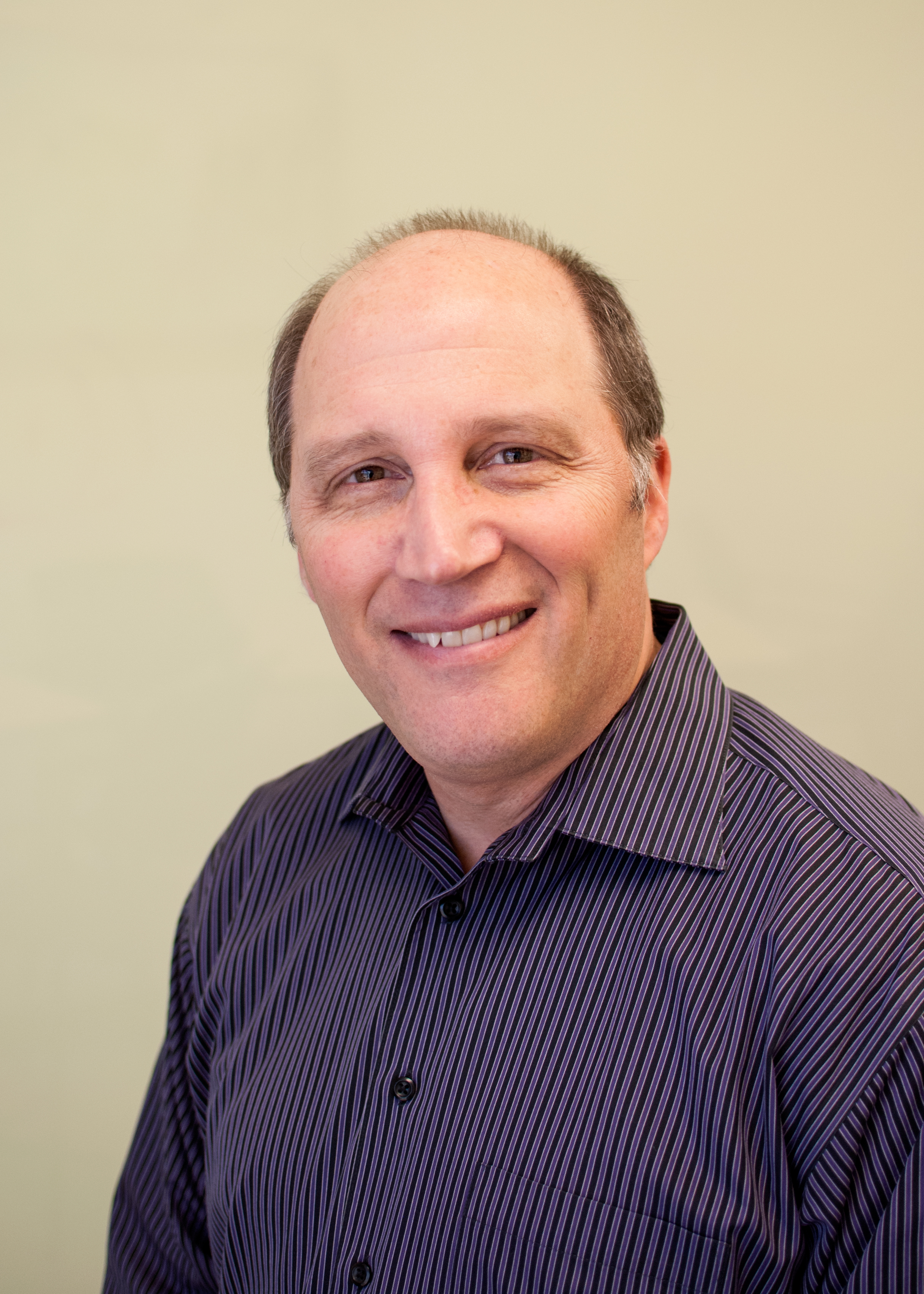
    Chapkin is the William W. Allen Endowed Chair in Nutrition and Chronic Disease Prevention at Texas A&M. He is a University Distinguished Professor, Regents Professor and University Faculty Fellow in the Program in Integrative Nutrition and Complex Diseases. He is also a Texas A&M AgriLife Senior Faculty Fellow.

    Election as an AAAS Fellow in Biological Sciences is an honor bestowed upon members by their peers, according to the association. This year, 416 members have been awarded this honor because of their scientifically or socially distinguished efforts to advance science or its applications.

    Chapkin and other new Fellows will be presented with an official certificate and a gold and blue rosette pin, whose colors represent science and engineering, respectively, on Feb. 16 at the 2019 AAAS annual meeting in Washington, D.C.

    Chapkin is a National Cancer Institute R35 Outstanding Investigator and is co-director of a National Institutes of Health-funded nutrition, biostatistics and bioinformatics training grant.

    Chapkin’s expertise is in dietary and botanical modulators related to prevention of cancer and chronic inflammatory diseases, such as inflammatory bowel disease. His research centers on colon cancer prevention by investigating the impact of dietary fat, fiber and gut microbiota status on chronic disease processes.

    He has received a number of awards for his work, including the Osborne and Mendel Award from the American Society for Nutrition, NASA Space Act Award and Bio Serv Award in Experimental Animal Nutrition from the American Society for Nutrition.

    Chapkin also is a member of numerous professional societies and has authored or co-authored more than 270 scientific research publications.

    Chapkin earned a bachelor’s degree in nutrition and biochemistry and a master’s degree in nutrition from the University of Guelph, Ontario, Canada, and a doctorate in nutrition and physiological chemistry from the University of California, Davis.
  • Salinas Receives Top Award for Poster

    ·

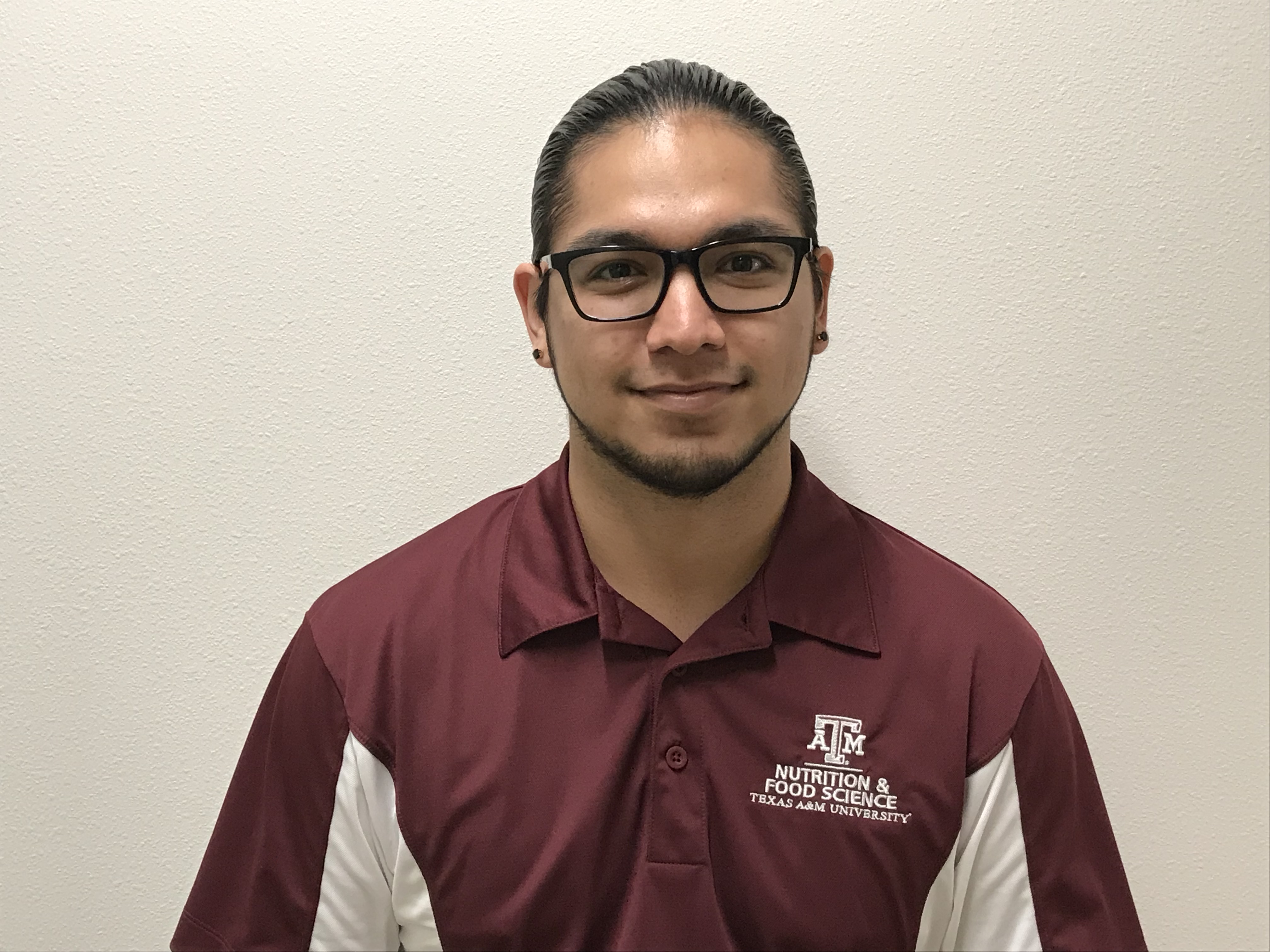
    Michael SalinasMichael Salinas, graduate student in the Nutrition and Food Science department and member of Chapkin lab received top honors for his poster presentation at the Microscopy and Imaging Center open house held on Friday, October 5, 2018.

  • Fuentes Receives Award at 3rd Annual Postdoctoral Research Symposium

    ·

    The Symposium, which highlighted research conducted by Texas A&M postdoctoral researchers, took place on Sept. 19, at the Thomas G. Hildebrand, DVM ’56 Equine Complex. Twenty-two postdoctoral researchers from Texas A&M gave flash talks while 20 delivered poster presentations.

    Fuentes, was awarded 2nd place for his poster presentation titled,
    “Long chain n-3 fatty acids attenuate oncogenic KRas-driven proliferation by altering plasma membrane nanoscale proteolipid composition.”Symposium Award Winners

  • Dr. Chapkin Co-Chair at AICR Review Panel

    ·

    The Grant Review Panel strives to short-list proposals that are most relevant, innovative, and impactful. Only the strongest applications that offer the greatest potential to deliver new progress in the prevention of cancer, and improve outcomes through lifestyle modifications, will be funded to pursue their research. The process is highly competitive and rigorous. The Chair of Grant Panel, Dr. Robert Chapkin (Texas A&M University) talks here about the panel and its mission: Click Here

  • Recent Publication in Cancer Research

    ·

    Long-Chain n-3 Fatty Acids Attenuate Oncogenic KRas-Driven Proliferation by Altering Plasma Membrane Nanoscale Proteolipid Composition

    Natividad R. Fuentes1,2, Mohamed Mlih3, Rola Barhoumi4, Yang-Yi Fan1, Paul Hardin5, Trevor J. Steele6, Spencer Behmer6, Ian A. Prior7,
    Jason Karpac3, and Robert S. Chapkin1,8

    Ras signaling originates from transient nanoscale compartmentalized regions of the plasma membrane composed of specific proteins and lipids. The highly specific lipid composition of these nanodomains, termed nanoclusters, facilitates effector recruitment and therefore influences signal transduction. This suggests that Ras nanocluster proteolipid composition could represent a novel target for future chemoprevention interventions. Read More….