
Svasti Haricharan PhD, associate professor of Biology at San Diego State University, co-appointed to the Moores Cancer Center at UCSD
March 7, 2025
“DNA repair in cancer cells through the lens of the host”
Dr. Haricharan completed her PhD at Baylor College of Medicine and postdoctoral training at MD Anderson Cancer Center. She is currently associate professor of Biology at San Diego State University, co-appointed to the Moores Cancer Center at UCSD, where research in her lab focuses on the impact of host characteristics, such as race/ethnicity, gender, and socioeconomic status on the somatic molecular biology of cancer and how this new understanding can be leveraged to improve precision oncology strategies in the clinic.
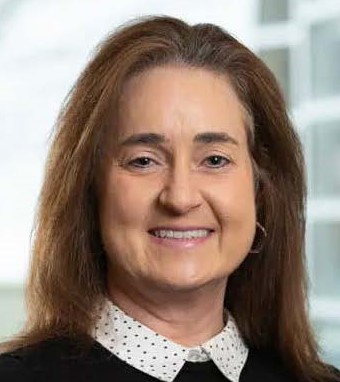
Dr. Jennifer Cullen, PhD, MPH, joined Houston Methodist Neal Cancer Center research team as the Associate Director for Cancer Control and Population Science.
November 14, 2024
Proteomics and Neighborhood-level Predictors of de Novo Metastatic Prostate Cancer: A Highlight of Cancer Prevention and Control Efforts
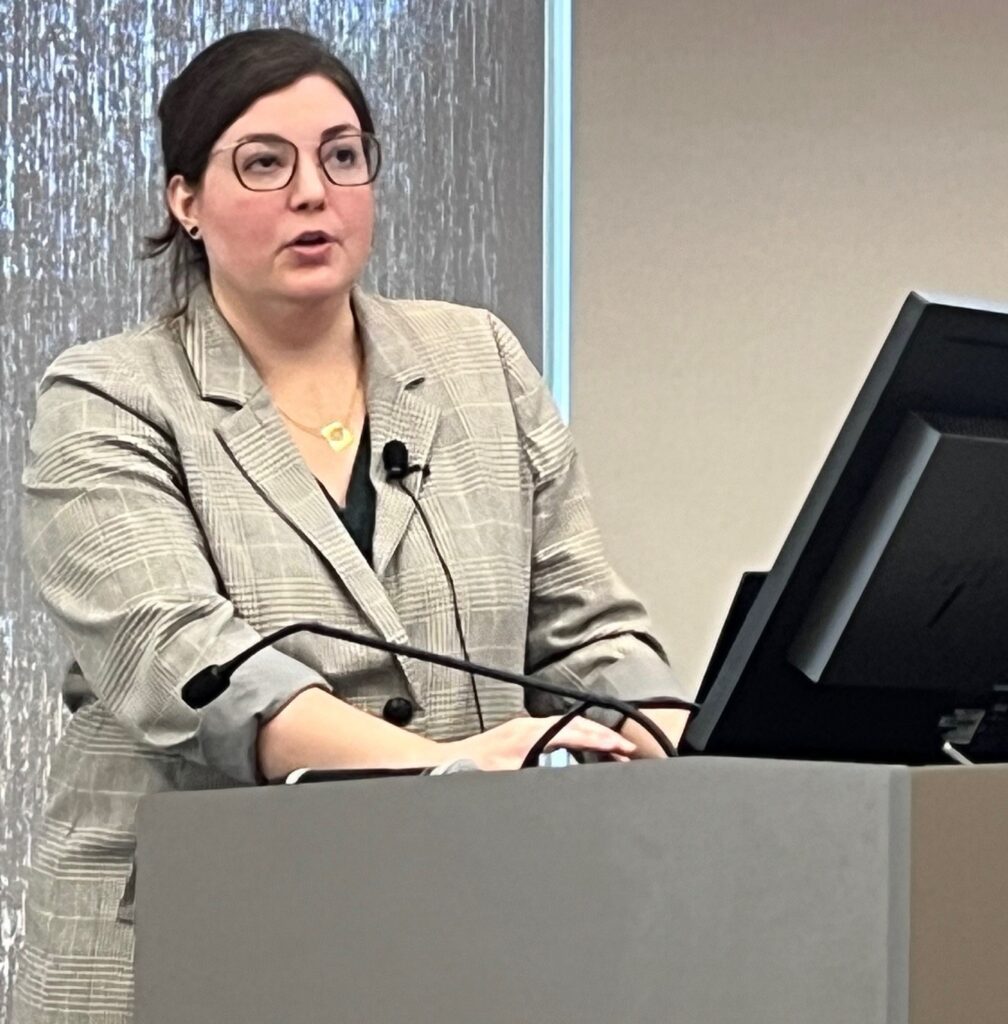
Dr. Jenna Mueller is an Assistant Professor in the Fischell Department of Bioengineering at the University of Maryland College Park and in the Department of OB-GYN & Reproductive Science at the University of Maryland School of Medicine. She is also a member of the Program in Oncology at the University of Maryland Marlene and Stewart Greenebaum Comprehensive Cancer Center. Her lab combines optical imaging, image processing, ablative therapies, and human-centered design to develop biomedical devices to solve challenges in global cancer. She received her bachelor’s degree in bioengineering with a minor in global health technologies from Rice University and received both an MS and PhD in biomedical engineering at Duke University for her work developing optical systems and algorithms to improve the accuracy of cancer excision during surgery. Prior to joining the University of Maryland, Dr. Mueller was a Postdoctoral Associate at Duke University where she worked with a multidisciplinary team to develop the Pocket colposcope, a low cost device to screen women for cervical dysplasia, which is now commercially available. Her work has been supported by a NSF CAREER Award and by the NCI through a K99/R00 Pathway to Independence Award, SBIR phase 1 and phase 2 awards, R21 and U01 subawards, and the NCI-UMD Partnership for Integrative Cancer Research award.
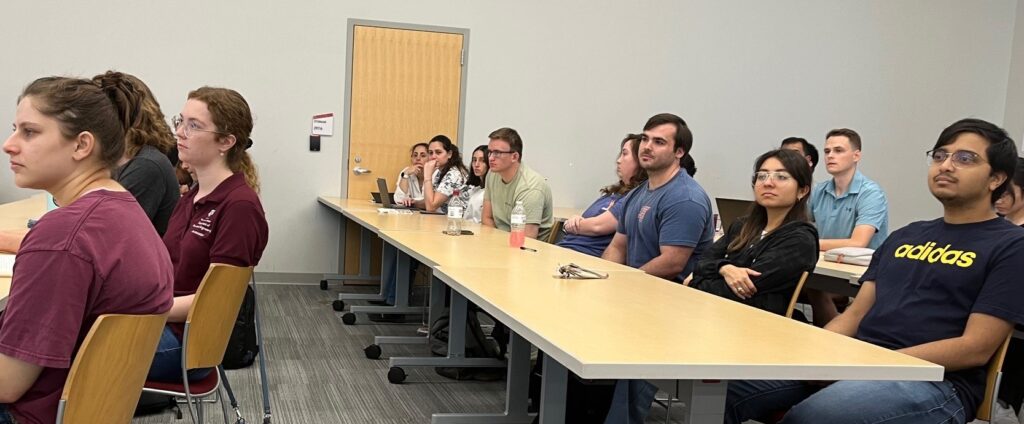
Audience at presentation October 31, 2024
October 31, 2024
Improving Cancer Management in Low & Middle-Income Countries through Human-Centered Biomedical Device Design

ABSTRACT
Worldwide cancer deaths are project to increase 50% in the next 20 years. Over 70% of cancer-related deaths occur in low
and middle-income countries (LMICs), and 50% of those deaths are considered premature. This rising cancer burden is
stressing an already overwhelmed healthcare system in many LMICs. For example, pathological diagnosis of biopsies is used to diagnose a majority of cancers; however, only 30% of LMICs reported having pathology services available. Additionally, while excisional surgeries are at the foundation of cancer treatment, 90% of patients in LMICs do not have access to surgery. In struggling healthcare systems, addressing the growing cancer burden may require a new vision – one that leverages low-cost, portable, electricity-independent, and accessible biomedical technologies to improve cancer management in LMICs. Dr. Mueller’s lab is focused on developing accessible biomedical technologies via a human-centered design approach to improve the management of cancer in LMICs. In this talk, Dr. Mueller will describe a combination of innovations that are at different stages in the translational pipeline to transform the management of cancer in LMICs.
These innovations include: 1) the Pocket colposcope, a portable device to screen women for cervical dysplasia at the
primary care setting, 2) gel ethanol ablation, an accessible treatment that involves injecting ethanol into a lesion to cause
necrosis, and 3) a low-cost, reusable laparoscope for intra-abdominal cancer surgeries performed in LMICs.
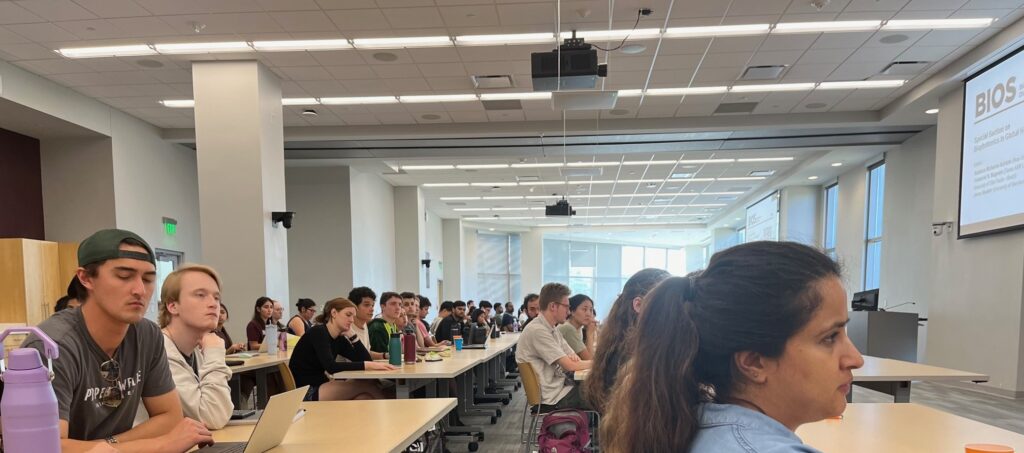
Audience at presentation October 31, 2024